
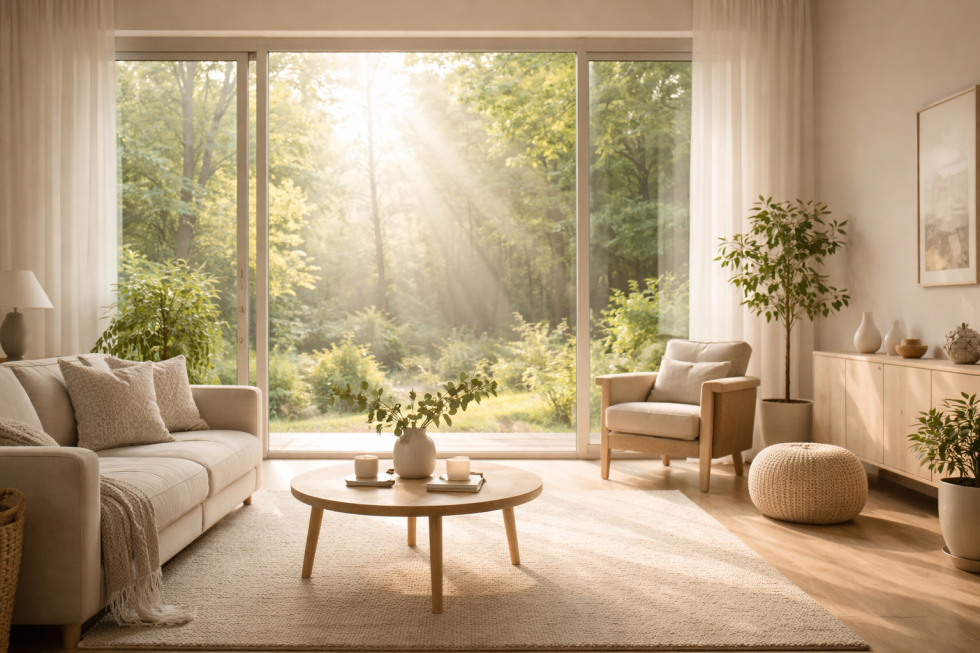
Light: the primary material of a space
We readily speak of walls, furniture, colours.
We often overlook what I believe matters most: light.
Before it is a setting, a space is first a particular way of receiving daylight.
A material one cannot touch
Light cannot be purchased or positioned like an object.
But it draws volumes, carves shadows, warms or cools a room.
Change the hour, change the season, and the same room becomes a different place.
Observing before arranging
Before deciding where to place a desk or an armchair, it seems to me useful simply to observe how light moves through the day:
- where the sun enters in the morning
- which corners remain in shadow in the afternoon
- which room becomes pleasant at sunset
One then places activities where the light serves them: reading near a window, resting in a softer corner.
A real effect, yet a personal one
That daylight influences our mood and sleep is nothing mysterious: it is something many people feel, and which is well understood.
But the way each person responds to it remains personal.
Some love very bright rooms; others need half-light to feel at ease.
There is no universal right answer. There is yours.
Working with what one has
Not every home is bathed in sunlight. And yet there is much one can do:
- clear the windows of what clutters them
- choose tones that reflect light rather than absorbing it
- multiply gentle light sources in the evening rather than a single overhead light
Conclusion
Before objects, there is light.
Attending to it is already beginning to understand a space, and often, to feel better within it.
Yannick Costechareyre